

Soaring Into a New Era of 3D Gaming
Few launch-era titles showcased the ambitions of the Sega Saturn quite like Panzer Dragoon (USA) (Demo) (3S). Released as a promotional demonstration version of one of Sega's most iconic rail shooters, this build gave players an early glimpse into a mysterious post-apocalyptic world filled with ancient ruins, biomechanical monsters, and exhilarating dragon-mounted combat. Developed by Team Andromeda and originally released in 1995, Panzer Dragoon quickly became one of the defining experiences on the Saturn, helping establish the console's reputation for ambitious 3D gaming.
At a time when the industry was transitioning from sprites to polygons, Panzer Dragoon demonstrated that cinematic action and immersive world-building could coexist within a fast-paced arcade framework. Even in demo form, the game's striking visual identity and innovative gameplay stood apart from competing shooters of the era.
Panzer Dragoon (USA) (Demo) (3S): A Preview of Saturn's Future
The demo version was designed to showcase the Saturn's capabilities while introducing players to the game's unique mechanics. Rather than simply offering a static presentation, the demo placed players directly into the action, allowing them to experience the sensation of riding a powerful dragon through sprawling landscapes.
What immediately distinguished Panzer Dragoon from other shooters was its emphasis on 360-degree combat. Instead of moving freely through environments, players followed predetermined flight paths while controlling their targeting reticle and camera orientation independently.
This created a gameplay experience that felt both accessible and surprisingly strategic. Threats could emerge from every direction, forcing players to constantly rotate their view and prioritize targets under pressure.
A World Unlike Anything Else
The game's setting blended science fiction and fantasy into a haunting vision of a fallen civilization. Towering ruins, desert wastelands, ancient technologies, and strange creatures created an atmosphere that felt genuinely alien.
Even within the limited scope of the demo, players encountered:
- Massive enemy creatures inspired by organic and mechanical designs.
- Ancient structures stretching across distant horizons.
- Fast-moving aerial combat scenarios.
- Cinematic camera angles that enhanced immersion.
- A memorable orchestral soundtrack supporting the action.
The world-building established a sense of mystery that would become a hallmark of the entire franchise.
Mastering the Skies: Gameplay Mechanics and Combat
The core gameplay revolves around dragon-mounted rail shooting. While the dragon automatically flies along a predetermined route, players maintain full control over aiming and targeting.
Combat utilizes two primary attack methods:
- Rapid-fire laser shots for precise damage.
- Lock-on homing attacks capable of striking multiple enemies simultaneously.
The lock-on system remains one of Panzer Dragoon's defining features. Players can sweep the cursor across several enemies before releasing a devastating volley of homing lasers.
The challenge comes from balancing offense and defense. Enemies attack from all directions, requiring constant camera rotation and situational awareness.
Unlike many arcade shooters that rely solely on reflexes, Panzer Dragoon rewards positioning, target prioritization, and efficient lock-on management. Boss encounters further reinforce these mechanics, often requiring players to identify weak points while dodging complex attack patterns.
Level Design Built for Spectacle
Every stage functions like an interactive roller coaster ride. Players soar over deserts, through ancient ruins, and across vast oceans while battling increasingly dangerous enemies.
The carefully scripted sequences create memorable moments without sacrificing gameplay. Enemy formations, environmental hazards, and boss introductions are timed to maximize excitement while maintaining a steady learning curve.
Pushing the Sega Saturn to Its Limits
In 1995, true 3D graphics were still a novelty. The Saturn's dual-CPU architecture was notoriously difficult to program, yet Team Andromeda managed to extract impressive results from the hardware.
Technical highlights included:
- Large polygonal environments.
- Detailed enemy models.
- Extensive draw distances for the era.
- Smooth camera transitions.
- Real-time targeting systems.
While modern players may notice occasional polygon pop-in or frame-rate fluctuations, these limitations were common among first-generation 3D games. What remains remarkable is the game's artistic direction, which continues to look distinctive decades later.
The soundtrack also deserves recognition. Combining orchestral arrangements with atmospheric compositions, the audio design amplified the sense of scale and adventure throughout every stage.
Playing Panzer Dragoon Today Through Emulation
Modern emulation allows players to experience the demo and full game with significant enhancements unavailable on original hardware.
Recommended Saturn Emulators
- Mednafen – Highly accurate Saturn emulation.
- Beetle Saturn (RetroArch core) – Excellent compatibility and customization.
- Kronos – User-friendly with strong visual enhancement options.
- Yaba Sanshiro 2 – Popular on Android devices and handheld systems.
Best Settings for Modern Hardware
- Enable internal resolution scaling between 3x and 8x.
- Use Vulkan rendering when available.
- Enable PGXP-like geometry correction if supported.
- Apply texture filtering cautiously to preserve original visuals.
- Use save states for practice and preservation.
When rendered at 1440p or 4K, environmental details become significantly sharper while maintaining the original artistic style. Upscaling reduces jagged polygon edges and improves image clarity without fundamentally altering the game's aesthetic.
Steam Deck and Odin Performance
Panzer Dragoon runs exceptionally well on modern handheld devices. The Steam Deck handles Saturn emulation effortlessly through RetroArch and Beetle Saturn, providing stable performance and low input lag.
Likewise, Odin handheld systems running Yaba Sanshiro 2 can achieve excellent frame rates while maintaining portability. The game's relatively straightforward control scheme translates perfectly to modern handheld hardware.
If players encounter graphical glitches such as texture corruption or flickering polygons, switching rendering backends or updating emulator cores typically resolves the issue.
The Legacy of a Dragon Rider
Panzer Dragoon became far more than a launch title. It established one of Sega's most respected franchises and inspired several acclaimed sequels.
The series evolved through:
- Panzer Dragoon II Zwei
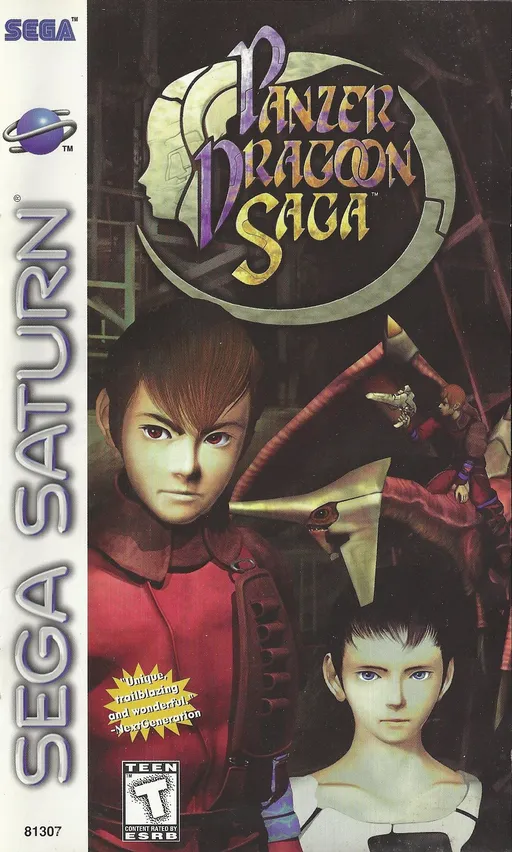
- Panzer Dragoon Saga
- Panzer Dragoon Orta
Among these, Panzer Dragoon Saga remains one of the rarest and most celebrated RPGs ever released, while Orta successfully revived the franchise on later hardware.
The original game also maintains a dedicated speedrunning community. Players continue to optimize stage routes, boss strategies, and scoring techniques decades after release.
Today, Panzer Dragoon is remembered not only as an excellent shooter but as a landmark title that helped define the identity of the Sega Saturn during the industry's most important technological transition.
FAQ
How do I fix glitchy textures in Panzer Dragoon (USA) (Demo) (3S)?
Use the latest versions of Beetle Saturn or Mednafen. Updating emulator cores and switching between Vulkan and OpenGL rendering often resolves texture issues.
What is the best version of Panzer Dragoon to play today?
The original Saturn release remains the most authentic experience, while modern emulation offers higher resolutions, save states, and reduced loading times.
Can Panzer Dragoon be played at 4K resolution?
Yes. Most modern Saturn emulators support internal resolution scaling, allowing the game to be rendered at 4K while preserving gameplay accuracy.
Is the demo version different from the full game?
The demo showcases a limited portion of the experience, focusing on introducing players to the dragon-riding combat and visual presentation. The full release contains multiple stages, expanded story content, and larger boss encounters.


